
Flume
FlumeHouse & Home
4.5215.00 Reviews
- Version
- 1.10.2
- Installs
- 50.00K
- Age Rating
- Everyone
Screenshots
Our Review of Flume
 Analysis by Appyee
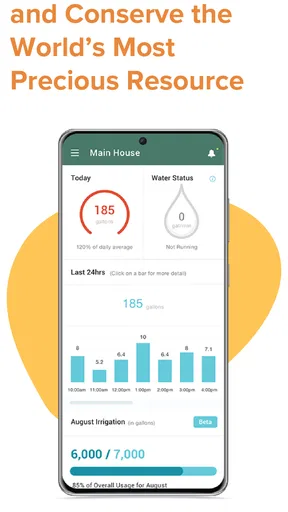
Water damage is one of those household problems I would rather notice early than discover after a ceiling, cabinet, or floor has already been ruined. Flume is a House & Home app from Flume that focuses on intelligent leak detection and water management for a residential home. I found its appeal easy to understand: instead of treating water use as something I only think about when a bill arrives, it turns the phone into a place to watch for unusual activity and possible trouble.
The app itself is free, has an Everyone age rating, and is listed with optional in-app purchases priced at $49.99 per item. That makes the cost question more nuanced than simply calling it free. You can install the app without paying for the download, but the useful value depends on the wider Flume setup and on whether the available purchase is appropriate for your home. I would not describe it as a complete replacement for a plumber, a shutoff valve, or a proper inspection. I see it as a monitoring layer that can help me react sooner.
How Flume fits into everyday home water monitoring
My first impression is that Flume makes the most sense when I want awareness without constantly walking around the house checking pipes and fixtures. A normal leak detector is often tied to one location: under a sink, near a washing machine, or beside a water heater. Flume’s residential-home focus suggests a broader approach, where the app is useful for looking at water activity as a household pattern rather than relying only on a small sensor that can detect moisture after water reaches the floor.
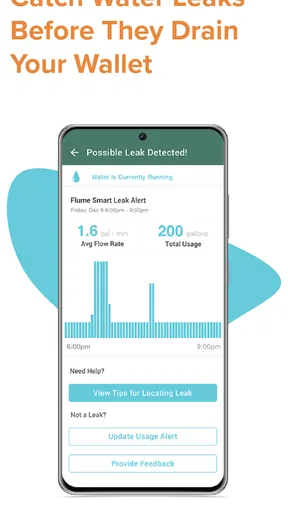
That distinction matters in real life. A leak behind a wall, a toilet that keeps refilling, or an outdoor line that starts using water unexpectedly may not create a visible puddle straight away. An app cannot make those problems disappear, but it can give me a reason to investigate before the damage becomes obvious. The practical benefit is not excitement or entertainment; it is reducing the time between an unusual event and my response.
The developer is Flume, and the app has been available since July 13, 2017. Its current version is 1.10.2, with a minimum operating-system requirement of 10. That gives the product a more established feel than a brand-new household experiment, although compatibility still matters. Before planning around it, I would check that the phone or tablet I intend to use meets that requirement.
The app has an average rating of 4.5 from around 500 ratings, with over 200 written reviews, and it has passed 50 thousand installs. Those figures do not prove that it will suit every property, but they do indicate that Flume has attracted a meaningful group of people interested in connected water monitoring. I also like that the product is aimed at ordinary residential use rather than being presented as a specialist commercial system.
What the free download does and does not mean
The free download lowers the barrier to trying the software, but I would avoid reading “free” as “everything needed for a working protection system costs nothing.” The listed optional purchase of $49.99 per item is important when calculating value. If I am comparing Flume with a basic app that only records manual notes or sends generic reminders, the free entry point is attractive. If I am comparing the complete experience with hardware, installation, or another connected-home service, I need to consider the purchase separately.
This is also why I would decide based on the home rather than the app alone. A renter who cannot access the relevant plumbing or install a compatible monitoring setup may gain little from downloading it. A homeowner who travels, manages an older property, or wants another way to notice unusual water use has a clearer reason to investigate the full system. The purchase price is easy to identify, but the overall value still depends on how the app connects to the home.
I appreciate that the cost is not hidden behind a vague promise of “premium features.” The stated price gives me a concrete starting point, while the free app lets me judge whether the interface and monitoring approach fit my habits. I would still treat the purchase as a considered household expense, not an impulse download.
A realistic morning-after scenario
Imagine I leave home for a weekend and a toilet valve begins running intermittently. There may be no dramatic flood, no obvious sound while I am away, and no reason for a neighbor to enter the house. What I want from a monitoring app in that situation is not a complicated report; I want a noticeable indication that water behavior has changed, enough context to decide whether to call someone, ask a neighbor to look inside, or wait until I return.
That is where Flume’s value is easiest to understand. It can make an invisible household event visible on my phone. The useful workflow is to establish a sense of normal use, pay attention to unusual activity, and then confirm the physical cause rather than assuming every alert means a burst pipe. If I receive a warning while away, I would first consider scheduled irrigation, a dishwasher cycle, guests, or another expected use. Only after checking those possibilities would I escalate.
This habit is more valuable than simply installing the app and forgetting it. I would use the early period to learn what ordinary mornings, evenings, and weekends look like in my home. That personal baseline helps separate a genuine anomaly from normal variation. It is a small but important insight: monitoring works best when I understand my own household rhythm instead of treating every change as an emergency.
Where the app can deliver more than a basic leak alarm
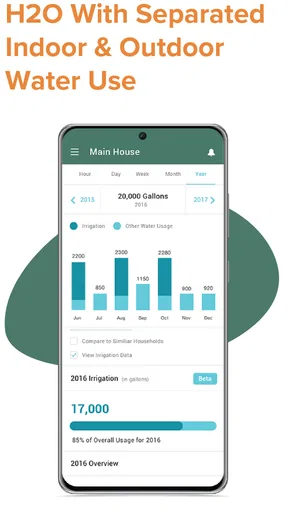
A basic moisture alarm tells me that water has reached a particular spot. Flume is more interesting when I use it to ask broader questions about the property. Is water being used when everyone is asleep? Does the outdoor schedule overlap with a time when I usually expect no irrigation? Did usage continue after I thought a fixture was turned off? These questions turn the app from a passive alarm into a tool for investigating habits and possible waste.
One practical workflow would be to check the app after making a repair. If I replace a toilet flapper or adjust an outdoor valve, I can watch for the old pattern to disappear rather than relying only on the absence of a visible leak. That does not replace a professional test, but it gives me a useful follow-up check. It can also help me notice when a repair solved the symptom but not the underlying problem.
Another useful trade-off is the difference between prevention and diagnosis. Flume may help me notice that something unusual is happening, but I still have to locate the source. A warning can narrow my attention toward plumbing, irrigation, or an appliance, yet it cannot automatically tell me whether the cause is a toilet, a hidden pipe, or a scheduled activity that I forgot about. I consider that a strength with a boundary, not a failure.
For households trying to reduce waste, the app can also support conversations that are otherwise difficult. Instead of saying “I think the sprinkler is using too much water,” I can compare what I observe before and after changing the schedule. Instead of guessing whether a fixture is slowly running, I can look for continued activity during a quiet period. The app becomes most useful when I connect what it shows with a physical check and a specific action.
The friction I would expect before relying on it
The biggest limitation is that a phone app alone cannot protect a home from every water emergency. If a pipe fails suddenly, the important response may be shutting off the supply, not merely receiving a notification. I would keep the main shutoff accessible, make sure household members know how to use it, and avoid treating Flume as an automatic emergency service unless the complete setup explicitly supports that role.
There is also a learning curve in interpreting unusual activity. A family with changing schedules may produce patterns that look suspicious even when everything is fine. Visitors, laundry days, garden watering, and seasonal changes can all affect water use. I would rather see the app as an aid to judgment than as an authority that decides whether my house has a leak.
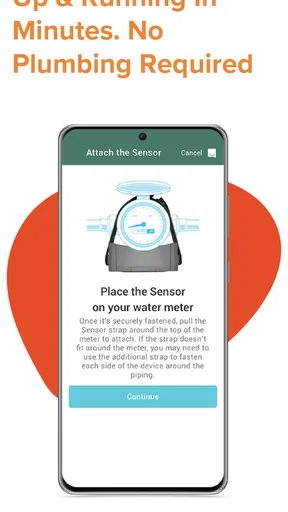
Another consideration is installation and property fit. The app’s usefulness depends on the broader Flume arrangement, so I would confirm compatibility and installation requirements before paying for anything. That is especially important in apartments, rented homes, properties with shared water infrastructure, or houses where the relevant meter and plumbing access are not straightforward. In those situations, a localized sensor may be simpler and more practical.
Notifications can create their own friction if I configure them carelessly. Too many alerts may lead me to ignore the next one, while too few may defeat the purpose of monitoring. I would begin conservatively, review several normal usage periods, and adjust my attention around the times when the house should be quiet. That is a more reliable approach than turning every possible warning on and then becoming numb to them.
Flume compared with the usual alternatives
The most familiar alternative is a small moisture sensor placed under a sink or near an appliance. That option is often easier to understand: water touches the sensor, the sensor reacts, and I inspect that location. It is a good choice when my concern is concentrated in one vulnerable area. Flume is more compelling when I want a home-wide view of water behavior and the ability to notice activity that may not yet have reached a sensor on the floor.
Another alternative is checking the water meter manually. Manual checks cost nothing beyond time and can be surprisingly effective if I remember to do them. The problem is consistency. I may not check during a quiet period, and I may not notice a gradual change until the bill or damage makes it obvious. Flume’s advantage is convenience and continuity, while the meter remains a useful independent reference when I want to verify what the app is showing.
Smart-home platforms can also offer leak sensors, automation, and alerts in one broader ecosystem. Those platforms may be better for someone who already owns compatible devices and wants one central control system. Flume is a more focused choice for a reader whose main concern is residential water awareness rather than building a large connected home. I would choose the broader platform if integration with existing alarms and automations mattered more than dedicated water monitoring.
A plumber’s inspection is a different kind of alternative altogether. Professional diagnosis is better when I already see damage, hear persistent pipe noise, smell dampness, or receive repeated unexplained warnings. Flume can help me notice a reason to investigate, but it cannot replace expertise when the problem is serious or difficult to locate. The strongest setup, in my view, is monitoring for early awareness plus professional help when the evidence points to a real fault.
Who is most likely to get their money’s worth
I think Flume is best suited to homeowners who want an ongoing view of water activity and are willing to learn what normal use looks like. It is particularly sensible for people who travel, own a second home, manage an older property, or have already experienced a slow leak. In those cases, earlier awareness may be worth more than the convenience of a simple floor sensor.
It can also appeal to someone who is trying to reduce waste without turning water management into a spreadsheet project. The app gives that effort a practical focus: observe a pattern, change one behavior, and check whether the result looks different. I would not expect it to solve inefficient irrigation or careless usage automatically, but it can make those issues easier to notice and discuss.
I would be more cautious if I lived in a small rental, had no control over the water infrastructure, or only wanted protection for one appliance. A compact sensor could be cheaper, easier to place, and less dependent on the property’s broader setup. I would also skip Flume if I am unwilling to respond to alerts or investigate unusual activity. Monitoring without follow-through creates reassurance without much protection.
Families should think about who receives and understands the alerts. If only one person watches the app but that person is often unavailable, the system may not fit the household’s real response pattern. Before relying on it, I would agree on who checks the property, where the shutoff is, and what counts as an urgent situation. That planning is not a feature of the app, but it determines whether the monitoring has practical value.
My value assessment and final recommendation
My view is positive, with a clear condition: Flume is valuable when I want home-wide water awareness and will use the information actively. The free app is a reasonable way to explore the experience, and the listed $49.99 per-item purchase gives the connected setup a defined cost to weigh against the potential inconvenience and damage of an unnoticed problem. I would not buy it solely because the word “smart” sounds reassuring.
The strongest benefit is the shift from waiting for visible water to watching for behavior that may reveal trouble earlier. The strongest weakness is that unusual activity still requires human interpretation, physical checking, and sometimes professional repair. That balance is important. Flume can improve awareness, but it is not a substitute for maintenance or an emergency shutoff plan.
I would recommend Flume to a homeowner who wants a focused water-monitoring tool, especially when travel or leak anxiety makes early warning worthwhile. I would skip it in a rental or single-risk situation where a simple local sensor solves the actual problem more directly. For everyone in between, I would start with the free download, confirm that the phone meets the minimum operating-system requirement of 10, learn the household’s normal patterns, and then decide whether the optional purchase delivers enough value for the property.
After using it in that deliberate way, I see Flume less as a flashy smart-home extra and more as a practical early-awareness system. It earns its place when it helps me notice a quiet problem before it becomes an expensive one. If that is the kind of protection I need, it is worth serious consideration; if I only need a sensor under one sink, there are simpler routes.
Verdict
Strengths of Flume
- Clean, intuitive interface makes browsing Instagram content feel effortless.
- Supports multiple accounts, useful for separating personal and professional profiles.
- Quick access to saved posts, likes, comments, and other account activity.
- Media loads smoothly on reliable connections with minimal visual clutter.
- Helpful for users who prefer a desktop-style Instagram experience on mobile.
Limitations of Flume
- Some Instagram features may be unavailable compared with the official app.
- Occasional login or session issues can require reconnecting your account.
- Advanced editing tools for photos and videos are limited or absent.
- Performance may vary after Instagram changes its platform or API behavior.
- Privacy-conscious users may hesitate to connect a third-party Instagram client.
Similar Picks in This Category
View All
Universal TV Remote Control
CodeMatics Media Solutions3.9

AlfredCamera Home Security app
Alfred Systems Inc.4.7

Planner 5D: AI Home Design
Planner 5D4.5

Universal Tv Remote-Cast to TV
One Music Player4.1

Zillow: Homes for Sale & Rent
Zillow Group4.8

99acres Buy/Rent/Sell Property
infoedge.com4.3
Frequently Asked Questions
What is Flume and what can I use it for?
Flume is a mobile app designed to help users interact with and manage their digital content through a streamlined interface. Depending on the version and platform, its tools may include browsing, organizing, sharing, or accessing connected services. Before downloading, check the official store description carefully, because available features, supported services, and functionality can differ between Android and iOS releases.
Is Flume free to download and use?
Flume may be available as a free download, but some features can require in-app purchases, a subscription, or an account with a supported service. It is worth reviewing the pricing section in the Google Play Store or Apple App Store before installing. Also check whether the free version includes advertising, usage limits, or restricted access to advanced tools.
Does Flume require an account or access to other services?
Depending on how you plan to use Flume, the app may require you to create an account or sign in through a compatible third-party service. Some functions may also need permissions for storage, notifications, photos, camera access, or network connectivity. Only grant permissions that make sense for the features you intend to use, and review the developer’s privacy policy beforehand.
Is Flume safe and suitable for my device?
Flume should be downloaded only from its official Google Play or Apple App Store listing to reduce the risk of installing an altered or unsafe version. Before installation, verify the developer name, recent update date, ratings, privacy disclosures, and requested permissions. Compatibility can vary by device and operating-system version, so confirm the minimum requirements if your phone is older.
What should I know about Flume’s privacy and performance?
As with any app that connects to online services or handles personal content, Flume may collect certain technical information, account details, usage data, or content-related information. Read the store privacy labels and the developer’s policy to understand how data is used and shared. Performance also depends on your device and connection, so features may work less smoothly on older phones or weak networks.
